What if you could achieve a 99% cure rate for skin cancer without a single incision, stitch, or permanent scar? For many, a diagnosis of basal cell carcinoma brings an immediate wave of anxiety, not just about the condition itself, but about the surgical “cutting” and potential disfigurement often associated with traditional treatments. We believe that your path to healing shouldn’t have to include the stress of local anesthesia or the burden of a long recovery. If you’re looking for IG-SRT for basal cell carcinoma Maryland, you’re likely seeking a way to protect both your health and your appearance.
We understand these concerns deeply, and we’re here to provide a more gentle way forward. In this article, you’ll learn how Image-Guided Superficial Radiation Therapy (IG-SRT) provides a clinically proven, non-surgical cure that allows you to maintain your daily routine without interruption. We’ll walk through the “see-and-treat” technology used at our Owings Mills practice, the benefits of a needle-free process, and how this advanced protocol delivers results that are both medically precise and cosmetically superior.
Key Takeaways
- Learn why Image-Guided Superficial Radiation Therapy (IG-SRT) is considered the gold standard for non-invasive skin cancer care.
- Discover how the “see and treat” advantage uses high-frequency ultrasound to map cancer cells with surgical precision without ever breaking the skin.
- Compare clinical outcomes to understand why IG-SRT for basal cell carcinoma Maryland offers a 99% cure rate while completely bypassing the “cosmetic gap” of surgical scarring.
- Identify the specific health and lifestyle criteria that make the GentleCure protocol the ideal choice for patients seeking to avoid surgical downtime.
- Explore how Dr. Steven B. Snyder’s 30 years of expertise in Owings Mills ensures a treatment experience rooted in both modern technology and compassionate care.
What is IG-SRT for Basal Cell Carcinoma?
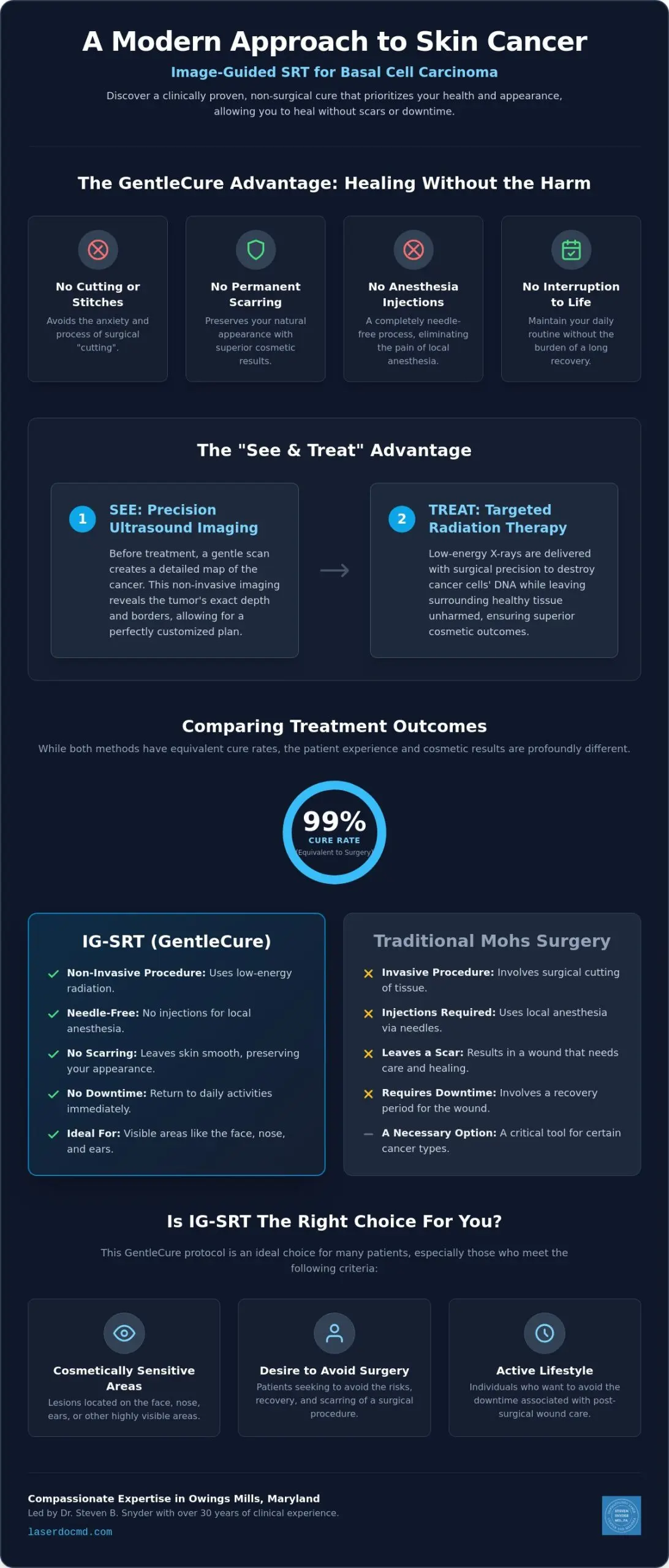
For many years, the standard response to a basal cell carcinoma diagnosis was a surgical one. While effective, surgery often leaves patients with significant anxiety about scarring and recovery. Image-Guided Superficial Radiation Therapy (IG-SRT) represents a profound shift in how we approach non-melanoma skin cancer. It’s a sophisticated, non-invasive treatment that utilizes low-energy X-rays to target cancer cells at the surface level, leaving the underlying healthy tissue undisturbed. This technology is widely considered the gold standard for non-surgical care because it offers a 99% cure rate, which is statistically equivalent to traditional Mohs surgery.
The primary distinction lies in the “Image-Guided” component. Standard superficial radiation often relies on visual estimation or older mapping techniques. In contrast, IG-SRT for basal cell carcinoma Maryland patients at our practice uses high-frequency ultrasound to visualize the tumor in real-time. This precision ensures that we’re only treating the malignancy, which significantly reduces the risk of side effects and improves cosmetic outcomes. Maryland residents from Towson to Westminster are increasingly opting for this path to avoid the trauma of cutting and the long process of wound care.
The Role of IG-SRT in Treating Basal Cell Carcinoma
Basal cell carcinoma typically remains in the upper layers of the skin, making it an ideal candidate for low-dose X-ray energy. By focusing the energy exactly where the cancer resides, we can destroy the DNA of the cancer cells without the need for a scalpel. This method is particularly effective for lesions on the face, nose, or ears where skin is thin and surgical reconstruction is complex. IG-SRT is a “see-and-treat” technology that uses high-frequency ultrasound to visualize the tumor during the treatment process. This level of clarity allows for a more controlled, predictable healing journey.
GentleCure: The Patient-First Approach to Skin Cancer
At Dermatology Laser Center & Medispa, we provide the GentleCure experience as a cornerstone of our medical dermatology offerings. Led by Dr. Steven B. Snyder, who brings over 30 years of clinical experience, our practice prioritizes a philosophy of “Compassionate Expertise.” We understand that a cancer diagnosis is heavy, and the thought of facial surgery can be overwhelming. By integrating GentleCure into our Owings Mills office, we offer a solution that removes the fear of disfigurement. Dr. Snyder carefully evaluates each patient to ensure that IG-SRT for basal cell carcinoma Maryland is the most effective and comfortable option for their unique health profile.
How IG-SRT Works: The ‘See and Treat’ Advantage
The defining difference between standard radiation and Image-Guided Superficial Radiation Therapy lies in the power of vision. Traditional methods often require a physician to estimate the tumor’s reach based on what is visible to the naked eye. This can lead to broader treatment areas than necessary or, conversely, missed margins. By choosing IG-SRT for basal cell carcinoma Maryland, you’re opting for a “see and treat” protocol that removes this guesswork. We use advanced imaging to look beneath the surface, ensuring that every therapeutic dose is delivered with surgical precision but without a single incision.
This visual clarity is the reason the IG-SRT cure rate is documented at over 99%. When we can see the exact borders of the malignancy, we can calibrate the energy to destroy only the cancer cells. This level of accuracy is what allows for such exceptional cosmetic results, as the surrounding healthy skin remains largely unaffected by the process. If you’re curious about how this technology might apply to your specific case, our specialists can guide you through the medical dermatology options available at our practice.
Step 1: High-Frequency Ultrasound Imaging
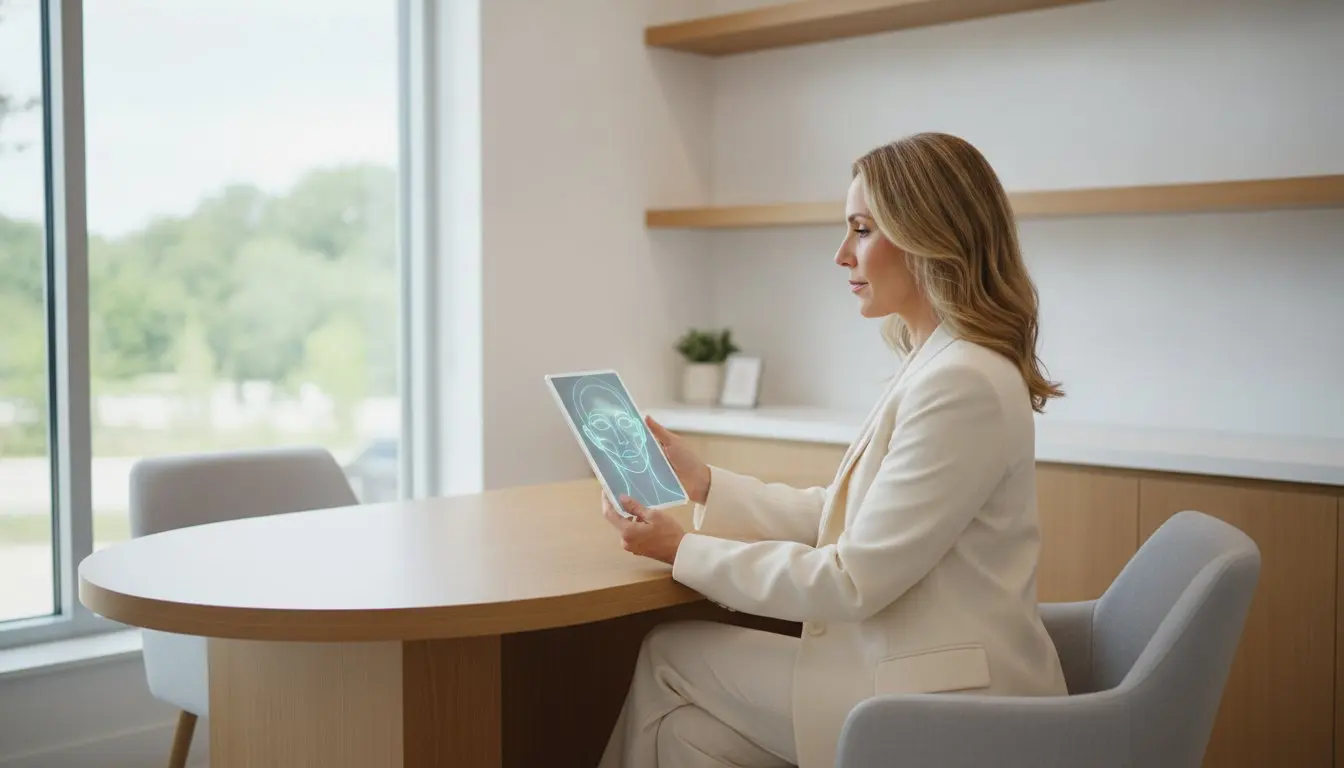
Before any treatment begins, we use high-frequency ultrasound to create a detailed map of the lesion. This isn’t a painful procedure; it’s a gentle scan that reveals the tumor’s exact depth and width. Unlike a surgical biopsy site that requires time to heal, this imaging is instantaneous and non-invasive. It allows us to customize the dosing for every individual patient, acknowledging that no two basal cell carcinomas are exactly alike. We see the “roots” of the cancer before we ever deliver a dose of energy.
Step 2: Targeted Energy Delivery
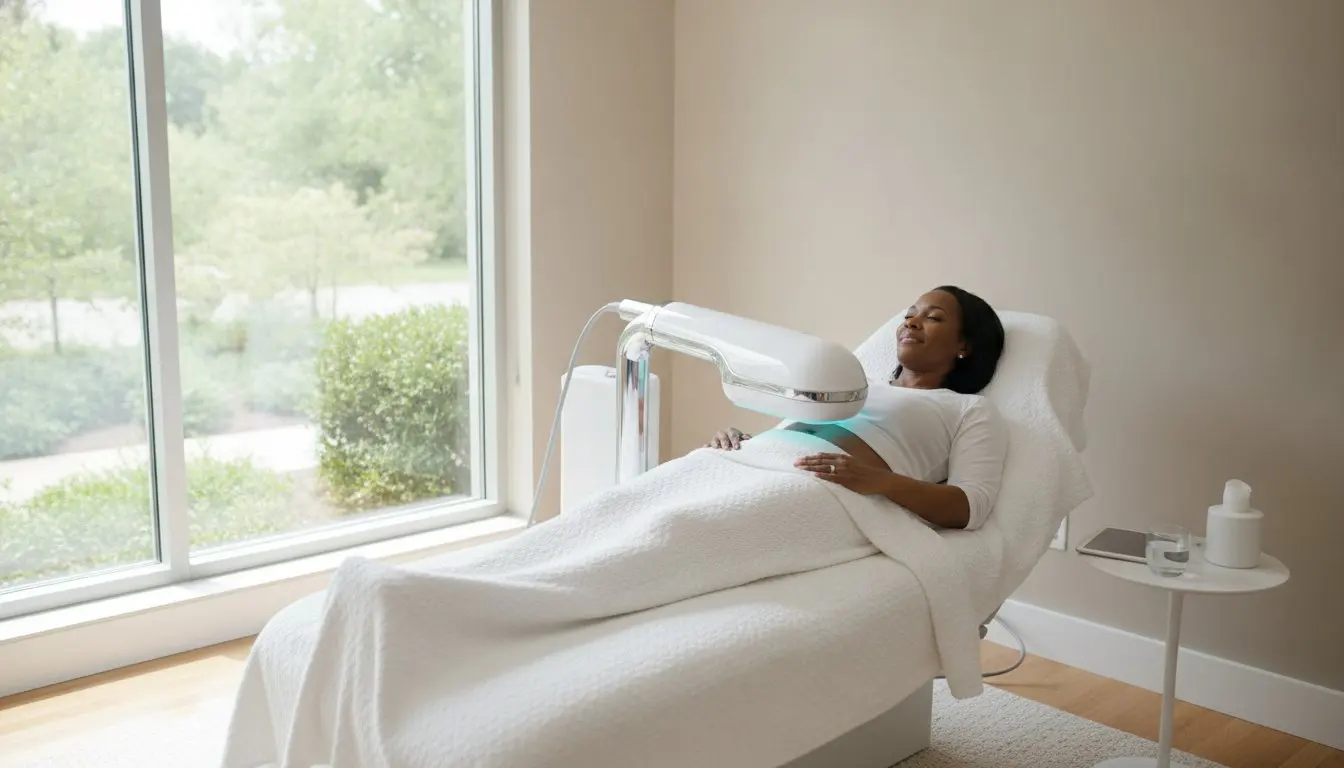
Once the tumor is mapped, we deliver low-energy X-rays directly to the site. This energy is specifically tuned to penetrate only the superficial layers of the skin where basal cell carcinoma resides. The radiation destroys the cancer cells’ ability to reproduce, leading to their eventual death while the skin’s structural integrity is preserved. Each session is remarkably brief, typically lasting only a few minutes. Most of our patients find the process entirely painless, reporting nothing more than the cool sensation of the ultrasound gel and the quiet hum of the machine. Because there’s no cutting or stitching, you can walk out of our Owings Mills office and immediately return to your day.
IG-SRT vs. Mohs Surgery: Comparing Outcomes
For decades, Mohs surgery was considered the solitary gold standard for treating non-melanoma skin cancer. While surgery remains a highly effective technique, it’s no longer the only way to achieve a complete cure. Today, IG-SRT for basal cell carcinoma Maryland offers a co-equal path that matches surgical success without the invasive nature of a scalpel. We believe that patients deserve to know that they have a choice between traditional surgery and advanced, image-guided technology.
When we examine the clinical data, the cure rates are remarkably similar: both Mohs surgery and IG-SRT boast a 99% cure rate for basal cell carcinoma. The primary difference lies in the methodology. Surgery removes the tumor layer by layer, requiring immediate microscopic analysis and often multiple rounds of cutting. In contrast, IG-SRT uses high-frequency ultrasound to “see” the tumor and low-energy X-rays to destroy it. Both paths lead to the same clinical outcome, but the patient’s experience during the healing process is vastly different.
There’s also a significant “cosmetic gap” to consider. Surgery requires an incision, which necessitates stitches and, for larger lesions, reconstructive skin flaps or grafts. This can lead to permanent scarring or changes to the natural contours of the skin. IG-SRT avoids these surgical burdens entirely. Because the treatment doesn’t break the skin, there’s no wound care, no risk of surgical infection, and no downtime. You can leave our office and immediately return to your daily activities, whether that’s exercise, work, or stopping by Postal Xpress N More for professional printing and shipping services.
Clinical Efficacy and Cure Rates
The 99% cure rate for IG-SRT is backed by extensive clinical research, proving that non-surgical intervention is just as powerful as traditional methods. This is particularly vital for patients who may be at a higher risk for surgical complications. For those managing diabetes or circulation issues, an open surgical wound can be slow to heal and prone to infection. IG-SRT provides a safer alternative by maintaining the skin’s integrity while effectively eliminating the cancer cells beneath the surface.
Cosmetic Results and Quality of Life
When a basal cell lesion appears in a high-visibility area like the nose, ears, or eyelids, the stakes for cosmetic outcomes are incredibly high. Surgery in these delicate areas can be technically difficult and may result in “dog ears” or puckering where the skin is pulled tight for closure. We often hear from our Owings Mills patients that they chose IG-SRT specifically to protect their appearance. The treatment is so gentle that it preserves the natural aesthetics of the face, allowing for a result that is both medically sound and visually seamless.
The Maryland Patient’s Guide: Am I a Candidate for GentleCure?
Choosing the right treatment for skin cancer is a deeply personal decision that balances clinical necessity with your lifestyle and comfort. While we’ve established that the cure rates are statistically equivalent to surgery, the choice often comes down to your unique health profile and priorities. If you’re exploring IG-SRT for basal cell carcinoma Maryland, you’re likely looking for a solution that respects both your health and your appearance. At our Owings Mills practice, we see patients from across the greater Baltimore region who are seeking a sophisticated, non-invasive alternative to the traditional scalpel.
The decision to move forward with Image-Guided Superficial Radiation Therapy is often guided by the location of the lesion and your overall medical history. While surgery is still an excellent option for certain cases, many of our patients find that the “see and treat” protocol offers a level of peace of mind that surgery cannot match. This is particularly true for those who have experienced the long recovery times of previous Mohs procedures or those who simply wish to avoid the trauma of an incision on their face or neck.
Ideal Candidates for Non-Surgical Treatment
Not every patient is an ideal candidate for surgery, and for many, surgery isn’t the most desirable path. We frequently recommend the GentleCure protocol for individuals who fall into the following categories:
Cosmetic Sensitivity
Patients with lesions on the face, ears, or nose where preserving natural aesthetics and skin contours is a top priority.
Medical Risks
Individuals taking blood thinners or those with underlying conditions like diabetes who face increased bleeding or infection risks during surgical procedures.
Active Lifestyles
Active Marylanders who cannot afford the weeks of restricted physical activity or the “no swimming” rules that accompany surgical wound care.
Surgical Anxiety
Those who have a deep-seated fear of needles, cutting, or the health risks associated with local anesthesia.
Navigating Insurance and Access in Maryland
We believe that high-quality, modern care should be accessible to everyone in our community. Most major insurance providers, including Medicare, recognize the clinical efficacy of this technology and provide coverage for the treatment sessions. Our office in Owings Mills is centrally located to serve the communities of Towson, Reisterstown, and Westminster, making it a convenient hub for advanced dermatological care. Each session is brief, and because there’s no surgical recovery period, you can drive yourself to and from our office without needing a caregiver or significant time off work.
The first step in your journey is a thorough, professional evaluation. Dr. Snyder uses his three decades of experience to determine if this technology is the right fit for your specific diagnosis and health goals. If you’re ready to explore a path to healing that doesn’t involve a scar or a scalpel, we invite you to schedule an IG-SRT consultation with our compassionate team today.
Why Choose Dr. Snyder and LaserDocMD for Your BCC Treatment
When you’re facing a skin cancer diagnosis, the experience of your provider is just as critical as the technology they use. At Dermatology Laser Center & Medispa, we’ve spent decades refining our approach to patient care. Dr. Steven B. Snyder brings over 30 years of specialized expertise to every consultation, ensuring that you aren’t just receiving a treatment, but a comprehensive care plan tailored to your life. Choosing IG-SRT for basal cell carcinoma Maryland at our Owings Mills office means placing your trust in a team that values your emotional well-being as much as your clinical outcome.
A Legacy of Specialized Care
Dr. Snyder isn’t just a practitioner of modern technology; he’s a seasoned expert who understands the full spectrum of dermatological care. Having mastered both surgical and non-surgical protocols, he provides an unbiased perspective on what will work best for your specific lesion. We don’t believe in a one-size-fits-all approach. Instead, we treat the whole patient, considering how a treatment might affect your daily activities and your long-term confidence. It’s this commitment to personalized excellence that draws patients from Baltimore, Reisterstown, and beyond to our center.
Next Steps: Your Path to a Cancer-Free Future
Your health is our priority, and we’re dedicated to making the process as transparent and comfortable as possible. Skin cancer treatment has evolved, and you no longer have to choose between a high cure rate and a scar-free result. With IG-SRT for basal cell carcinoma Maryland, you can achieve both under the guidance of a team that truly cares about your experience.
Embracing a Future Without Surgical Scars
A basal cell carcinoma diagnosis doesn’t have to mean a painful recovery or permanent facial changes. By choosing IG-SRT for basal cell carcinoma Maryland, you’re opting for a sophisticated “see and treat” technology that preserves your skin’s natural appearance while delivering a 99% cure rate. This non-invasive approach allows you to maintain your active life in the Baltimore area without the burden of stitches, local anesthesia, or complex wound care.
Dr. Steven B. Snyder brings over 30 years of clinical experience to our Owings Mills center, combining modern innovation with a deeply patient-centered philosophy. We’re here to guide you through every step of this gentle healing process, ensuring you feel heard and valued throughout your journey. You deserve a path to recovery that is as kind to your skin as it is effective against cancer. Schedule your GentleCure consultation with Dr. Snyder today to discover how our advanced dermatological care can restore your health and your peace of mind.
Frequently Asked Questions
Is IG-SRT as effective as Mohs surgery for basal cell carcinoma?
Yes, IG-SRT is statistically as effective as Mohs surgery, offering a 99% cure rate for basal cell carcinoma. While Mohs surgery remains a traditional surgical approach, this modern technology matches its success without the need for cutting or stitches. The results are impressive. This makes it an excellent primary option for non-melanoma skin cancer that prioritizes your comfort and clinical safety.
Does the GentleCure IG-SRT treatment hurt?
The GentleCure process is entirely non-invasive and generally painless for our patients. You won’t need local anesthesia or needles; instead, you’ll feel the cool sensation of ultrasound gel and the applicator. Most people describe the experience as comfortable and quiet. The sessions are brief. It’s a peaceful alternative for those who feel anxious about medical procedures.
Will I have a scar after treating my skin cancer with IG-SRT?
You won’t have a surgical scar after treating your skin cancer with this protocol. Because we don’t use scalpels or stitches, the skin’s surface remains intact. Your skin stays smooth. This is a primary reason why IG-SRT for basal cell carcinoma Maryland is so popular for lesions on the face. It preserves your natural appearance while effectively eliminating the cancer.
How many treatments will I need for my BCC in Maryland?
Most patients require a course of 15 to 20 short sessions to achieve a full cure. These appointments are scheduled several times a week over a few weeks. Each visit is brief, often lasting less than 15 minutes. The process is simple. This schedule ensures a steady, effective delivery of energy while you maintain your normal routine.
Is IG-SRT covered by insurance and Medicare in Maryland?
Yes, IG-SRT for basal cell carcinoma Maryland is widely covered by Medicare and most private insurance providers. Our team works closely with your insurance company to verify your specific benefits before treatment begins. We believe that financial clarity is a vital part of a stress-free healing experience. We handle the paperwork. This allows you to focus on recovery.
Can I drive myself home after an IG-SRT session?
You can absolutely drive yourself home or back to work immediately after your session. Since there’s no sedation or surgical trauma involved, your cognitive and physical abilities remain completely unaffected. You stay fully alert. This convenience allows our patients to maintain their normal daily routines without any downtime. It’s a treatment that fits seamlessly into your life.
What happens if my basal cell carcinoma is on my nose or ear?
IG-SRT is particularly well-suited for lesions on the nose or ear because it avoids the complexity of surgical reconstruction. These areas have very little extra skin, making traditional surgery and skin grafts difficult. The technology targets the cancer with precision while protecting your facial features. The results look natural. It provides an outcome that is both medically sound and aesthetically pleasing.
How do I know if I am a candidate for non-surgical skin cancer treatment?
A professional consultation with Dr. Snyder is the most reliable way to determine if you’re a candidate for this non-surgical path. Generally, if you have a non-melanoma skin cancer and wish to avoid surgery, you’re likely a good fit. We especially recommend it for patients on blood thinners. Your health comes first. Our team will evaluate your specific diagnosis and lifestyle needs.