What if the most effective path to being cancer-free didn’t involve a single stitch or a permanent scar? For many, the anxiety of a skin cancer diagnosis is often compounded by the fear of surgical disfigurement and the long recovery times that follow. We believe you deserve a treatment experience that respects both your health and your desire for a natural appearance. Knowing what to expect after IG-SRT treatment is the first step toward a confident recovery, as it allows you to see how your skin undergoes a sophisticated biological remodeling rather than a traumatic surgical repair.
This guide will walk you through the entire journey, from the subtle changes in your skin during the first week to the long-term clinical outcomes that boast a 99.3% cure rate. We’ll explore the day-by-day healing process, offer practical lifestyle tips to support your recovery, and show you how this technology preserves your natural appearance without interrupting your daily life. You’ll find that the road to being cancer-free can be as smooth as the final results themselves.
Key Takeaways
- Learn why GentleCure offers a true “no-stitch” experience with zero interruption to your daily Maryland routine or physical activities.
- Discover exactly what to expect after IG-SRT treatment by following a clear, six-week timeline from initial redness to the emergence of healthy new skin.
- Master the “Golden Rule” of recovery with specific tips on sun protection and gentle skincare to ensure a scar-free cosmetic outcome.
- Understand the role of image-guided ultrasound technology in providing clinical confirmation that the cancer has been successfully treated.
- Benefit from the peace of mind that comes with Dr. Steven B. Snyder’s 30 years of specialized dermatological expertise in the Baltimore area.
Table of Contents
Immediate Post-Treatment: The First 48 Hours with GentleCure
The immediate aftermath of a medical procedure often brings thoughts of recovery rooms and restricted movement. However, the first 48 hours after a GentleCure session are remarkably different. We define this initial period as a “no-downtime” experience because it doesn’t require the physical recovery typically associated with invasive surgery. When patients ask what to expect after IG-SRT treatment, the most surprising answer is often how little their daily routine actually changes.
Unlike Mohs surgery, which involves cutting into the skin and physical reconstruction, GentleCure utilizes Image-Guided Radiation Therapy to target cancer cells from the surface. Because the skin’s surface remains intact, you won’t find yourself managing bulky bandages, painful stitches, or complex wound care protocols. You might notice a mild, localized sensation similar to a light sunburn. This is a normal biological response as the treatment begins its work. Most of our patients in Owings Mills find they can drive themselves home and return to their professional or social commitments immediately after leaving the office.
The “No-Stitch” Advantage
One of the most significant benefits of this approach is the absence of local anesthesia soreness. Surgical excisions often leave the area tender or numb for hours; however, IG-SRT avoids this discomfort entirely. By eliminating the need for an open wound, we significantly reduce the risk of post-treatment infections that can sometimes complicate surgical recoveries. You won’t need to purchase specialized home-dressing kits or worry about keeping a surgical site dry. This simplicity reflects our commitment to providing sophisticated care that prioritizes your comfort.
Immediate Activity Guidelines
Your physical freedom remains entirely intact following a session. There are no restrictions on lifting, bending, or reaching, making this an ideal choice for active Maryland residents. You can step into the shower or wash your face as soon as you return home without fear of disrupting the treated area. We only ask that you exercise a small degree of caution regarding your skincare products. For the first 48 hours, it’s best to avoid harsh chemical exfoliants or abrasive scrubs on the specific site. Understanding what to expect after IG-SRT treatment means realizing that your lifestyle stays exactly as it was before you walked through our doors.
The IG-SRT Healing Timeline: Week 1 Through Month 6
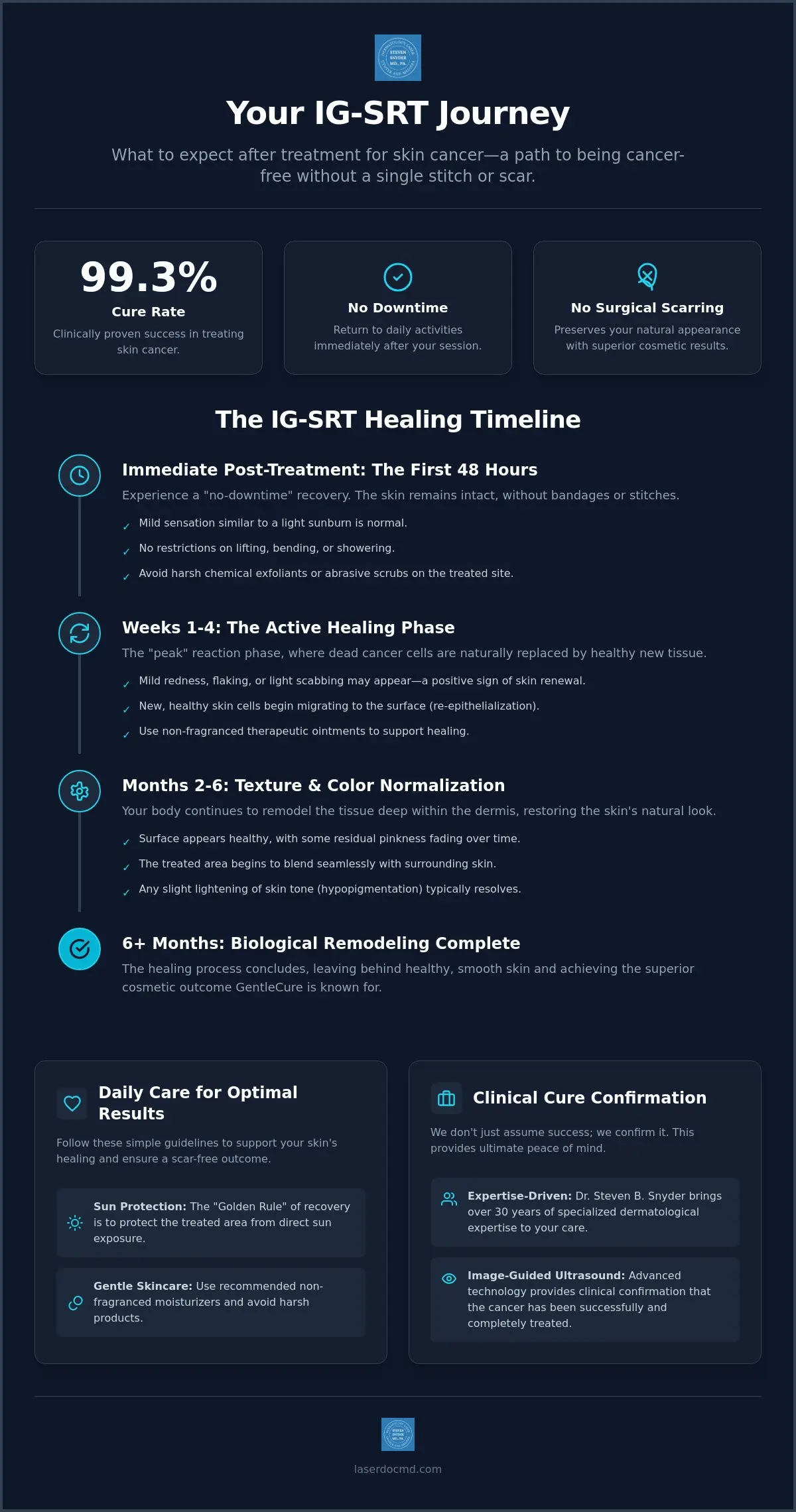
Healing is a methodical process of restoration, not just the simple passage of time. During the first two weeks after your final session, your skin enters its “peak” reaction phase. This often manifests as a mild redness and flaking, which is a sign that the GentleCure technology has successfully targeted the unwanted cells. By weeks three through six, a process called re-epithelialization begins. This is the biological stage where new, healthy skin cells migrate to the surface to replace the treated tissue. Understanding what to expect after IG-SRT treatment helps you recognize these changes as milestones of progress rather than causes for concern.
Weeks 1-4: The Active Healing Phase
In this initial month, your skin undergoes a significant transition as dead cancer cells are naturally replaced by healthy tissue. You might notice some mild scabbing or a light “crust” forming over the treated site; we view this as a positive indicator of skin renewal. To support this delicate process, we recommend a specific regimen of moisturizers. Dr. Snyder typically prefers non-fragranced, therapeutic ointments that maintain a protective barrier during this active month. If you have questions about which products are safest for your skin type, you can schedule a consultation with our team to receive a personalized care plan tailored to your needs.
Months 2-6: Texture and Color Normalization
As you move into the second month, the surface of the skin usually appears healthy, though some residual pinkness may linger. This pinkness is a result of increased blood flow as your body continues to remodel the tissue deep within the dermis. Knowing what to expect after IG-SRT treatment ensures you feel confident while the treated area begins to blend seamlessly with the surrounding skin. While rare, some individuals may notice hypopigmentation, which is a slight lightening of the skin tone. In most cases, this resolves over time as natural pigment returns. By the six-month mark, the biological remodeling is largely complete, resulting in the superior cosmetic outcomes that patients value so highly.
Daily Care and Lifestyle Adjustments After Treatment
Maintaining your daily rhythm is a core benefit of non-surgical care. While the biological remodeling happens beneath the surface, your daily choices play a vital role in ensuring the best possible cosmetic result. Many patients worry that medical treatment means putting their life on hold, but with GentleCure, the opposite is true. Understanding what to expect after IG-SRT treatment includes knowing how to support your skin while maintaining your normal routine without disruption.
Unlike surgical procedures that require weeks of physical restriction, IG-SRT allows you to keep up with your active lifestyle. High-intensity workouts and heavy lifting are perfectly safe even during the active healing weeks. There are no incisions to pull or tear, so sweat and movement won’t compromise your results. If the treated area is on your face, you can typically apply makeup within a few days. We simply recommend using mineral-based cosmetics that allow the skin to breathe while it heals.
Sun Safety in Maryland
The “Golden Rule” of recovery is strict sun protection. Treated skin is more sensitive to ultraviolet rays, which can lead to temporary hyperpigmentation if left unprotected. In Owings Mills and the surrounding Baltimore area, this means applying a broad-spectrum SPF 30+ every single morning. Even on cloudy days, UV rays can reach the healing site. Physical barriers like wide-brimmed hats provide an extra layer of security for facial sites. Once your initial healing is complete, you might consider laser skin rejuvenation in Owings Mills to maintain a radiant, healthy complexion across your entire face.
Skincare Do’s and Don’ts
A gentle approach is always best during the re-epithelialization phase. We want to keep the area hydrated to support the natural emergence of new, healthy skin cells. Follow these simple guidelines to ensure a smooth recovery:
Do
Use lukewarm water and a mild, non-fragranced cleanser twice daily.
Do
Pat the skin dry very gently with a soft, clean towel. Never rub the healing site.
Do
Apply the therapeutic ointments recommended by our team to maintain a protective moisture barrier.
Don’t
Use active anti-aging ingredients like Retin-A, AHAs, or BHAs on the healing site until Dr. Snyder clears you.
Don’t
Pick at any flaking skin or scabs. Let them fall off naturally to prevent scarring.
By following these practical steps, you ensure that your skin heals as efficiently as possible. Knowing what to expect after IG-SRT treatment gives you the confidence to manage your recovery with ease while enjoying the superior cosmetic results this technology provides.
Clinical Milestones: Ultrasound Scans and Cure Confirmation
The journey toward a cancer-free diagnosis doesn’t end with your final treatment session; it concludes with definitive clinical proof. Unlike traditional therapies that often rely on visual inspection alone, the GentleCure protocol uses high-frequency ultrasound to verify that the tumor has been eradicated. When considering what to expect after IG-SRT treatment, the most reassuring milestone is the post-treatment scan. This technology allows us to see beneath the surface of the skin to confirm that the basal cell or squamous cell carcinoma is gone, providing a level of certainty that wasn’t always possible without surgery.
This precision is particularly beneficial for treating “difficult” anatomical areas such as the nose, ears, and eyelids. In these locations, skin is thin and surgical margins can be challenging to obtain without affecting function or appearance. Because IG-SRT targets the cancer with a 99.3% cure rate, as shown in a study of nearly 3,000 treated skin cancers, patients can achieve clinical success without the need for reconstructive surgery. At Dermatology Laser Center & Medispa, our follow-up schedule is designed to monitor your progress closely, ensuring that your skin remains healthy long after the initial sessions are complete.
Seeing is Believing: The Post-Treatment Scan
In traditional Mohs surgery, “clear margins” are determined by a pathologist during the procedure. With Image-Guided SRT, we use digital imaging to achieve that same peace of mind. The post-treatment ultrasound provides a clear, high-resolution look at the treatment site, confirming the “invisible” results that occur as the cancer cells dissipate. Seeing a clear ultrasound image at your follow-up appointment often provides an immense sense of relief, as it offers objective data that your healing is complete. If you’re ready to experience this level of clinical precision, contact our Owings Mills office to discuss your options.
Long-Term Surveillance
A diagnosis of non-melanoma skin cancer means that long-term surveillance is essential for your continued health. Even after a successful outcome, we encourage all our patients to maintain a schedule of regular full-body skin checks. Dr. Snyder uses his 30 years of clinical experience to monitor the treated site and the surrounding skin, looking for any early signs of new developments. This ongoing relationship ensures that your health is prioritized for years to come. For a more detailed look at the technology we use to achieve these results, you can read our guide on GentleCure: Non-Surgical Skin Cancer Treatment in Maryland. Understanding what to expect after IG-SRT treatment means knowing you have a dedicated partner in your long-term wellness.
This commitment to long-term wellness often extends to the entire family, including our pets; to ensure your animal companions receive high-quality health management, you can explore Preventive Care at the Animal Hospital of Sullivan County.
Why Choose Dr. Snyder for Your IG-SRT Journey in Owings Mills?
Our practice is unique in its ability to offer the GentleCure protocol within a comfortable medispa environment. This setting is intentionally designed to reduce the clinical stress often associated with a skin cancer diagnosis. By blending medical necessity with aesthetic preservation, we ensure that you feel supported through every phase of your journey. This holistic approach is why so many patients feel confident when they learn what to expect after IG-SRT treatment under our care, knowing that their skin’s integrity is in expert hands.
A Legacy of Care in Maryland
We’re proud to serve the communities of Owings Mills, Towson, and Hunt Valley with a patient-centered atmosphere that feels both highly skilled and deeply approachable. Our legacy is built on a foundation of trust and mutual respect, values that are sometimes lost in larger medical institutions. If you’ve been told that surgery is your only option, we encourage you to seek a second opinion. Many Maryland residents discover that the “no-stitch” alternative is not only possible but preferred for their active lifestyles. We take the time to answer every question, ensuring you’re fully informed about what to expect after IG-SRT treatment before your very first session begins.
Taking the Next Step
Starting your path toward a cancer-free life is a straightforward process. We’ve simplified our consultation experience so that you can focus on your healing rather than administrative hurdles. Our goal is simple. We want you to enjoy a life free from the burden of surgical scars or the anxiety of recurrence. You deserve the confidence that comes from being treated by a practitioner who is both a master of modern technology and a practitioner of old-school, attentive care. Schedule your consultation with Dr. Snyder today.
Embracing a Future of Clear, Healthy Skin
The journey through skin cancer treatment doesn’t have to be defined by surgical trauma or lasting scars. By choosing Image-Guided SRT, you’re opting for a sophisticated, “no-stitch” path that respects your body’s natural ability to heal. Understanding what to expect after IG-SRT treatment helps you navigate the process with confidence, from the active weeks of skin renewal to the final, seamless cosmetic results. We’re here to ensure that your recovery is as smooth as the clinical outcome itself.
With a cure rate exceeding 99% for non-melanoma skin cancer and the precision of state-of-the-art Image-Guided technology, you can prioritize your health without sacrificing your daily lifestyle. Dr. Steven B. Snyder brings over 30 years of dermatological expertise to every consultation, offering the compassionate guidance you deserve during this important time. We invite you to consult with Dr. Snyder about GentleCure IG-SRT in Owings Mills to see how this advanced care can work for you. You don’t have to walk this path alone; let us help you achieve the cancer-free future you deserve.
Frequently Asked Questions
How long does the redness last after my final IG-SRT session?
Redness typically peaks within the first two weeks following your final session. While the most visible flaking and irritation usually subside by week four, a faint pinkness may persist as the skin continues its internal biological remodeling. This gradual fading is a normal part of what to expect after IG-SRT treatment, and the area will eventually blend naturally with your surrounding skin tone.
Can I exercise or go to the gym immediately after an IG-SRT treatment?
You can return to the gym or your favorite exercise routine immediately after your appointment. Because this is a non-surgical procedure with no incisions, there’s no risk of tearing stitches or opening a wound through physical exertion. Whether you enjoy yoga or high-impact training, your physical activity won’t interfere with the healing process or compromise your clinical results.
Will I have a scar after the IG-SRT site heals?
One of the primary advantages of this technology is the lack of surgical scarring. Unlike Mohs surgery, which requires cutting and suturing, IG-SRT preserves the healthy tissue surrounding the tumor. Most patients see a superior cosmetic result where the treated area becomes virtually indistinguishable from the rest of their skin once the healing and remodeling phases are complete.
What happens if I miss a scheduled IG-SRT session during my course?
While consistency is key to the best outcomes, missing a single session won’t jeopardize your treatment’s success. We understand that personal or professional conflicts can arise during your multi-week course. If a conflict occurs, we’ll simply adjust your schedule to ensure you receive the full prescribed dose of energy needed to successfully eradicate the cancer cells.
Is IG-SRT safe for patients with pacemakers or other medical implants?
IG-SRT is entirely safe for patients with pacemakers, defibrillators, or other medical implants. The radiation used is superficial, meaning it only penetrates a few millimeters into the skin’s surface. It doesn’t reach the depths where internal medical devices are located, making it an excellent and safe choice for patients with more complex medical histories.
How soon after IG-SRT can I have other cosmetic treatments like Botox or fillers?
We generally recommend waiting until the skin has fully healed, which typically takes about four to six weeks. Once the re-epithelialization process is complete and the skin surface is stable, you can resume aesthetics like Botox or fillers. Dr. Snyder will evaluate the site during your follow-up appointment to provide specific clearance for your next cosmetic session.
Does insurance cover the follow-up ultrasound scans and visits?
Most insurance providers, including Medicare, cover the follow-up visits and ultrasound scans as they are essential clinical milestones. These appointments allow us to verify the tumor’s destruction and monitor your long-term health. We always suggest contacting your specific provider to confirm the details of your plan’s coverage for what to expect after IG-SRT treatment.
What should I do if the treated area becomes itchy or irritated?
It’s common for the area to feel slightly itchy as new, healthy skin cells emerge to replace the treated tissue. You should apply the non-fragranced, therapeutic ointments recommended by our team to keep the site hydrated and protected. It’s important to avoid scratching or picking at the skin. If the irritation becomes bothersome, please contact our office for professional guidance.