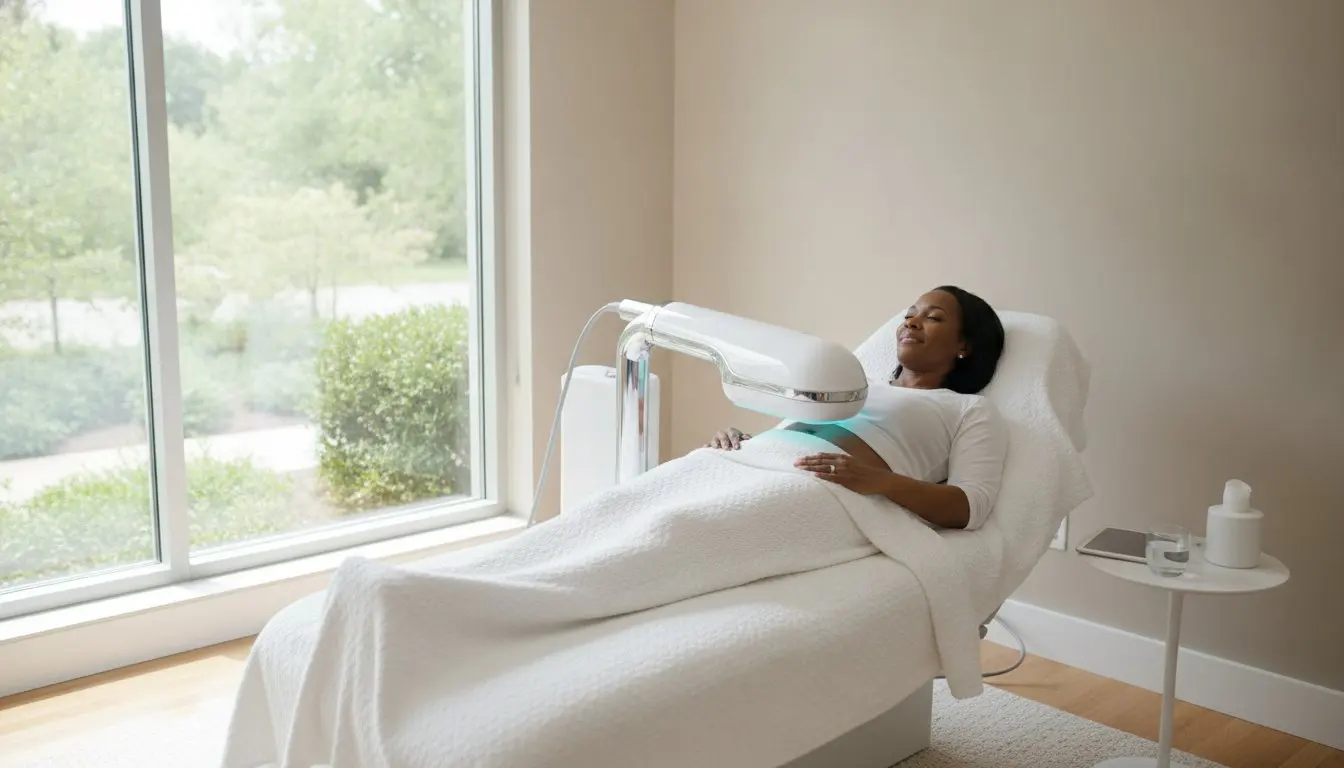
What if the most effective path to clearing your skin cancer didn’t require a scalpel, stitches, or the lingering worry of a surgical scar? For many of our patients, the primary concern isn’t just the diagnosis itself, but whether the treatment will change how they see themselves in the mirror. You’re likely wondering, is gentlecure covered by medicare in 2026? The short answer is yes, though recent changes in how the imaging component is handled require a careful look at your specific plan. We understand that managing medical costs is just as important as the clinical outcome, and we’re here to provide the clarity you deserve.
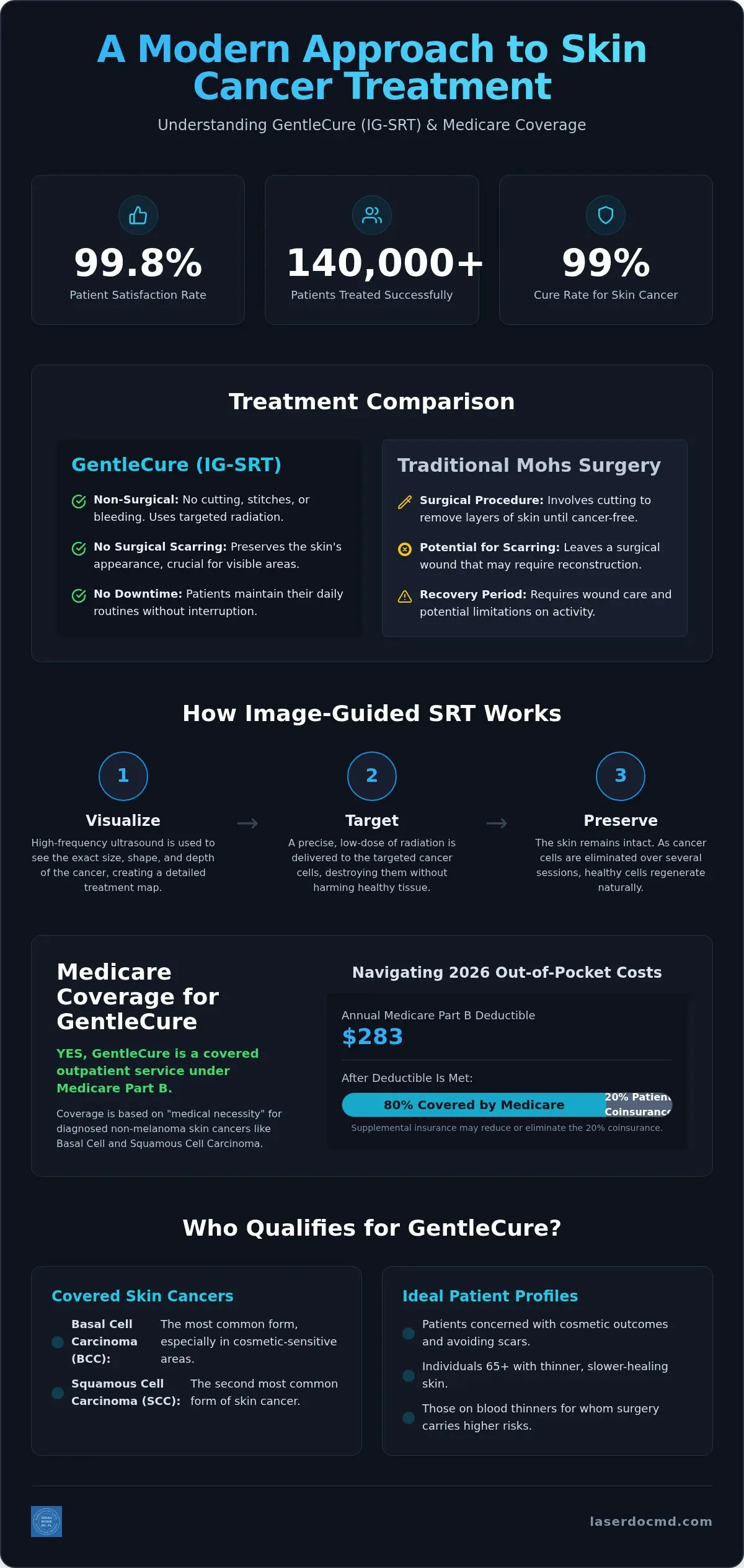
It’s natural to feel overwhelmed by Medicare Part B deductibles and the fear of hidden expenses during an already stressful time. This guide is designed to replace that anxiety with a clear, professional roadmap for your care, especially since over 140,000 patients have already chosen this path with a 99.8% satisfaction rate. You’ll learn how Image-Guided Superficial Radiotherapy (IG-SRT) compares to surgical alternatives and how to navigate the 20% coinsurance after meeting your 2026 deductible of $283. We’ll also walk through the exact verification protocol to ensure your journey toward healing is as seamless and transparent as possible.
Key Takeaways
- Understand how GentleCure (IG-SRT) is classified as an outpatient service under Medicare Part B, ensuring access to non-surgical care for basal and squamous cell carcinomas.
- Find out why the answer to is gentlecure covered by medicare is a resounding yes for most patients who have met their 2026 Part B deductible of $283.
- Compare the clinical outcomes of Image-Guided SRT against traditional Mohs surgery, noting the 99% cure rate and the absence of surgical scarring or downtime.
- Learn the exact steps to verify your insurance benefits and schedule a thorough consultation with a specialist who has over 30 years of experience.
Understanding GentleCure and Medicare Eligibility in 2026
GentleCure is the sophisticated brand name for Image-Guided Superficial Radiotherapy (IG-SRT). This technology represents a significant leap forward in dermatological oncology, combining the precision of high-frequency ultrasound with the efficacy of Superficial radiation therapy. By using ultrasound to visualize the tumor in real time, your physician can target the cancer cells with remarkable accuracy while sparing the healthy surrounding tissue. We find that this level of detail provides our patients with a sense of confidence that is often missing from traditional, “blind” radiation treatments.
When patients inquire, is gentlecure covered by medicare, they are often seeking reassurance that this advanced technology is accessible. Medicare and the majority of private insurance providers recognize IG-SRT as a standard, effective treatment for non-melanoma skin cancer. Because it’s an outpatient medical procedure, it’s typically covered under Medicare Part B. Eligibility is primarily determined by “medical necessity,” which means your dermatologist has confirmed a diagnosis of skin cancer and determined that radiation is an appropriate clinical path for your specific case.
This treatment is especially relevant for the 65+ demographic. As we age, our skin becomes thinner and healing times for surgical incisions can lengthen. For those managing other health conditions or taking blood thinners, the “no cutting” approach of GentleCure isn’t just a preference; it’s a safer medical alternative. It allows you to maintain your daily routine without the physical limitations or wound care required after surgery.
Maintaining independence and mobility is a key concern for this age group; for those seeking specialized support, Optima Physical Therapy offers concierge care and physical therapy flint mi to help patients stay active and healthy while managing their medical care.
What Types of Skin Cancer Qualify for Coverage?
Medicare coverage for GentleCure is specifically designed for non-melanoma skin cancers. The two primary types that qualify include:
- Basal Cell Carcinoma (BCC): This is the most common form of skin cancer. Medicare covers IG-SRT for BCC when the tumor is located in areas where surgery might cause functional or cosmetic issues, such as the nose, ears, or eyelids.
- Squamous Cell Carcinoma (SCC): As the second most common form, SCC can be more aggressive. Medicare recognizes IG-SRT as a primary treatment option for SCC, providing a cure rate that rivals traditional Mohs surgery.
In 2026, Medicare continues to prioritize treatments that offer high clinical success rates with lower risks of complications, positioning IG-SRT as a frontline choice for many patients.
This emphasis on innovative, low-risk options reflects a broader trend in oncology where patients seek personalized care; for those exploring advanced alternative medicine for cancer and complex chronic diseases, Sunridge Medical serves as a resource for comprehensive treatment strategies.
The Difference Between Medical Radiotherapy and Cosmetic Procedures
It’s vital to distinguish between clinical cancer treatments and elective aesthetic services. While our practice specializes in both medical and cosmetic dermatology, GentleCure is strictly a medical intervention. Medicare does not provide coverage for cosmetic rejuvenation, such as laser treatments for sun spots or wrinkles. However, because GentleCure is FDA-cleared as a cancer treatment, it satisfies the rigorous requirements for insurance reimbursement. The focus here is the eradication of malignancy. While the lack of scarring is a welcome benefit, the primary goal is always your health and the permanent removal of the cancer cells.
Navigating Medicare Part B: Coverage and Out-of-Pocket Costs
Understanding the financial landscape of medical care is just as vital as understanding the clinical procedure itself. Because GentleCure is an outpatient service, it falls under Medicare Part B. For 2026, the annual Part B deductible is $283. Once you meet this deductible, Medicare traditionally follows an 80/20 payment structure. This means Medicare pays 80% of the Medicare-approved amount, while you are responsible for the remaining 20% coinsurance. When patients ask, is gentlecure covered by medicare, they are often relieved to find that this standard coverage applies to our non-surgical radiotherapy, provided the treatment is deemed medically necessary for your diagnosis.
While the 80/20 rule is the foundation of Part B, many patients find that their out-of-pocket responsibility is significantly reduced or even eliminated by supplemental insurance. Before starting your journey, it’s helpful to consult with a specialist who can review your specific Medicare benefits and provide a clear estimate of your responsibility.
Inpatient vs. Outpatient: Why Part B Matters
It is a common misconception that major cancer treatments require a hospital stay. GentleCure is performed in a freestanding clinic or a private dermatology office, which is why Medicare Part A, or hospital insurance, rarely applies to this treatment. By receiving care in an outpatient setting, you avoid the higher deductibles associated with inpatient hospital stays, which for 2026 is $1,736 per benefit period. Instead, billing is based on the Medicare-approved amount. This is a set fee that Medicare considers appropriate for the service, ensuring that you aren’t billed for arbitrary or inflated costs.
Managing Your 20% Coinsurance
For many of our patients, a secondary insurance plan, often called Medigap, manages the 20% coinsurance that Medicare Part B does not cover. Plans such as Medigap Plan G or Plan N are specifically designed to pick up these remaining costs. If you have one of these plans, your out-of-pocket expenses for GentleCure may be minimal after your Part B deductible is satisfied.
If you don’t have supplemental insurance, you’ll be responsible for the 20% coinsurance for each session. It’s worth noting that your total cost depends on the number of sessions required for your specific lesion, which is determined during your initial clinical evaluation. Our team works closely with Medicare to ensure all billing is transparent, allowing you to focus entirely on your recovery rather than financial uncertainty.
GentleCure Reviews: Evaluating Clinical Results vs. Mohs Surgery
Clinical excellence is often measured by statistics, but for our patients, the true proof lies in their reflection in the mirror after treatment. When evaluating GentleCure reviews, the most striking data point is the 99% cure rate for both basal cell and squamous cell carcinomas. This level of efficacy is comparable to traditional Mohs surgery, but it achieves these results without the use of a scalpel. Patients frequently share their relief at finding a solution that doesn’t involve the physical trauma of cutting, stitching, or the long recovery periods associated with surgical intervention.
One of the most sophisticated features of this treatment is the integrated high-frequency ultrasound. Unlike older forms of radiation, this technology allows you to see your progress in real time. We find that patients experience a significant reduction in anxiety when they can look at the screen and literally see the cancer shrinking over the course of their sessions. This visual confirmation provides a level of reassurance that surgery simply cannot offer. While patients often ask, is gentlecure covered by medicare, their second question is usually about the trade-off between the time commitment and the final aesthetic result.
IG-SRT vs. Mohs Surgery: A Financial and Clinical Comparison
Mohs surgery is often viewed as a “one-and-done” procedure, which can be appealing for those with busy schedules. However, surgery often carries hidden costs that aren’t immediately apparent. These can include expenses for reconstructive work, specialized wound care supplies, and lost wages during recovery. In contrast, IG-SRT sessions are brief, typically lasting about 15 minutes. While the results become most visible around the third or fourth week, the lack of surgical scarring is a massive advantage, particularly for lesions on the face, ears, or nose. For many, the value of preserving their natural appearance far outweighs the logistics of multiple office visits. Patients who want a deeper look at how these approaches compare can explore our comprehensive guide to non-surgical vs surgical skin cancer treatment Maryland options to make a fully informed decision.
What Patients Say About the Treatment Process
Common themes in positive GentleCure reviews center on the pain-free nature of the sessions and the supportive environment of a private clinic. Patients appreciate that they can drive themselves to and from appointments without the need for anesthesia or post-operative pain medication. It is essential to manage expectations regarding the schedule; most reviews that mention a “drawback” focus on the requirement for multiple visits per week. Despite this, the satisfaction rate among Medicare-aged patients remains exceptionally high at 99.8%. Confirming is gentlecure covered by medicare allows these individuals to choose a path that prioritizes their long-term quality of life and skin health; for those interested in how other gentle wellness practices support similar health goals, you can learn more about Livelovelife Chiropractic.
How to Verify Your Coverage: A Step-by-Step Guide
Understanding whether is gentlecure covered by medicare involves more than just a “yes” or “no” answer; it requires a structured verification process to ensure your specific plan is ready to support your care. We believe that financial transparency is a cornerstone of patient-centered treatment. Our administrative team works as your advocate, handling the technical communication with Medicare so you can focus on your health. This methodical approach ensures that there are no surprises once your treatment begins.
The journey starts with a clinical consultation where we confirm your diagnosis and evaluate if you are a candidate for Image-Guided SRT. During this time, we provide specialized financial counseling to walk you through the expected costs based on your unique Medicare plan and any secondary insurance you may hold. To ensure a seamless start, we recommend that you schedule a comprehensive benefit verification with our office coordinators.
Step 1: The Clinical Diagnosis and Pathology
Before Medicare approves any cancer treatment, they require definitive proof of the malignancy. This is why a skin biopsy is the essential first step in the coverage chain. We perform a small sample collection and send it to a laboratory to confirm the presence of basal or squamous cell carcinoma. Your pathology report must clearly state the cancer type, as this document serves as the primary evidence of medical necessity for Medicare. Once we have this confirmation, we can move forward with GentleCure: Non-Surgical Skin Cancer Treatment in Maryland as a clinically supported alternative to surgery.
Step 2: Benefit Verification and Pre-Determination
Once the diagnosis is established, our Owings Mills office contacts Medicare on your behalf to verify your current status. We check if your 2026 Part B deductible of $283 has been met and confirm how your secondary insurance interacts with the 20% coinsurance. You will eventually receive an Explanation of Benefits (EOB) from Medicare. It is important to remember that an EOB is not a bill; it is a summary of what Medicare covered and what was applied to your deductible. If Medicare requires additional clinical notes or photographs of the lesion, our team manages those requests directly to prevent any delays in your care.
To prepare for your consultation, we suggest keeping a checklist of questions for our insurance coordinator:
- Has my 2026 Medicare Part B deductible been fully satisfied?
- Does my Medigap or supplemental plan cover the full 20% coinsurance?
- Are there any prior authorization requirements specific to my Medicare Advantage plan?
- How many treatment sessions has Medicare pre-approved for my specific diagnosis?
Starting Your GentleCure Journey in Maryland
Residents in the greater Baltimore area, including Towson and Owings Mills, have access to world-class dermatological oncology right in their neighborhood. Dr. Steven B. Snyder brings more than 30 years of clinical experience to every consultation, ensuring that your path to recovery is guided by a seasoned expert. We believe that receiving hospital-grade technology shouldn’t require the cold, impersonal atmosphere of a large medical institution. Our practice at Dermatology Laser Center & Medispa is designed to feel like a haven of professional care and personal attention.
When you’re managing a skin cancer diagnosis, the logistical details can feel heavy. One of the most common inquiries we address is whether is gentlecure covered by medicare for our local patients. Because we specialize in both medical and cosmetic dermatology, we understand the nuances of insurance billing and medical necessity. We take pride in being a trusted guide for Maryland residents, offering a clear path to healing that avoids the physical and emotional toll of traditional surgery. By choosing a local specialist, you gain the convenience of being close to home while receiving the highest standard of non-surgical care. Maryland patients who are still weighing their options can review our detailed breakdown of non-surgical vs surgical skin cancer treatment Maryland approaches to better understand which path aligns with their diagnosis and lifestyle.
Expert Care in a Reassuring Environment
A private practice setting allows for a more intimate, patient-centered experience than what’s typically found in a large hospital. We take the time to listen to your concerns, answer your questions, and explain the science behind your care. This balance of clinical authority and warmth is essential for a successful outcome. Our expertise extends beyond oncology; we also offer advanced aesthetic solutions such as Laser Skin Rejuvenation in Owings Mills for those looking to enhance their skin’s overall health and radiance after their medical treatment is complete.
Next Steps: Scheduling Your Consultation
Preparing for your first visit is straightforward. Please bring your Medicare card, a list of current medications, and any pathology reports from your initial biopsy. During your meeting with Dr. Snyder, he’ll perform a thorough examination of the lesion and review your clinical history to confirm you’re an ideal candidate for GentleCure. Once the medical necessity is established and your benefits are verified, we can often begin the treatment process within a short timeframe. Your journey to cancer-free skin starts with a single, respectful conversation. We’re here to ensure that when you ask, is gentlecure covered by medicare, you receive a clear and reassuring answer that allows you to move forward with confidence.
Securing Your Path to Scar-Free Healing
The choice to treat skin cancer without surgery is a decision that prioritizes both your clinical health and your natural appearance. We’ve explored how Image-Guided SRT offers a 99% cure rate for non-melanoma skin cancers while eliminating the risks of surgical scarring and prolonged wound care. By understanding the 2026 Medicare Part B guidelines, you can navigate your treatment with financial confidence. The primary question of is gentlecure covered by medicare is answered through a clear, medically necessary diagnosis and our dedicated benefit verification process; for patients who value this same level of gentle, specialized attention in other areas of their health, Precision Spinal Care offers a similar commitment to non-invasive excellence.
Dr. Steven B. Snyder brings over 30 years of dermatological excellence to Maryland patients, offering a level of expertise that combines modern technology with attentive, individualized care. We invite you to take the next step in your healing journey within a private, compassionate environment. Schedule Your GentleCure Consultation with Dr. Snyder Today to confirm your candidacy for this advanced, non-surgical treatment. Your peace of mind and long-term skin health are our highest priorities; we look forward to guiding you toward a clear and healthy future.
Frequently Asked Questions
Is GentleCure considered a “covered” benefit under Medicare Part B?
Yes, GentleCure is a covered benefit under Medicare Part B because it’s classified as a medically necessary outpatient radiation treatment. When patients ask is gentlecure covered by medicare, they’re often relieved to find it’s a standard part of dermatological oncology coverage. As long as your physician confirms a diagnosis of non-melanoma skin cancer, Medicare typically pays its portion of the approved amount for the procedure.
Will I have a deductible to pay before Medicare covers my skin cancer treatment?
You’ll need to satisfy your annual Medicare Part B deductible before your coverage for GentleCure begins. For 2026, this deductible is $283. Once you’ve met this threshold, Medicare’s “80/20” rule applies. If you’ve already seen other doctors or had outpatient services earlier in the year that met this amount, your insurance coverage for the radiotherapy sessions will start immediately.
Does Medicare cover the ultrasound imaging used during GentleCure?
Medicare covers the overall radiotherapy process, though the specific ultrasound imaging component is currently “bundled” into the primary treatment payment. While the imaging is a vital part of the GentleCure protocol for targeting the tumor, CMS regulations mean it isn’t billed as a separate line item. We handle these administrative technicalities for you, ensuring that the focus remains entirely on your clinical progress and recovery.
Can I get GentleCure if I have a Medicare Advantage plan instead of Original Medicare?
Patients with Medicare Advantage plans are eligible for GentleCure, as these private policies are required to cover the same essential services as Original Medicare. However, your specific Advantage plan might have different prior authorization requirements or network restrictions. We recommend a brief benefit verification with our office to ensure your plan’s specific rules are followed before you begin your first session.
What is the cure rate for GentleCure compared to Mohs surgery?
GentleCure has a cure rate of over 99% for basal cell and squamous cell carcinomas, making it clinically equivalent to Mohs surgery. This success rate is supported by data from over 140,000 patients who have chosen this non-surgical path. It’s an excellent option for those who want the high efficacy of surgery without the physical trauma of cutting, stitches, or potential cosmetic disfigurement.
How many treatments of GentleCure are typically needed for basal cell carcinoma?
A typical course of treatment for basal cell carcinoma involves 20 sessions, usually scheduled several times a week. Each session is brief, often lasting only about 15 minutes, which allows you to fit the treatment into your daily routine easily. This gradual approach is why the answer to is gentlecure covered by medicare is so vital for patients who prefer a gentle, non-invasive recovery over a single surgical event.
Are there any hidden costs I should be aware of for non-surgical treatment?
There are no hidden fees, but you should be aware of the standard 20% coinsurance if you don’t have a supplemental Medigap plan. Medicare Part B pays 80% of the approved amount, leaving the remaining 20% as the patient’s responsibility. We provide a transparent financial consultation before your first treatment to ensure you have a clear understanding of any out-of-pocket costs based on your specific coverage.
Do I need a referral from my primary care doctor to get GentleCure covered?
Original Medicare doesn’t require a referral to see a dermatologist for GentleCure, though some Medicare Advantage HMO plans might. If you’re using a private Advantage plan, it’s always wise to check if a referral is needed to maintain your “in-network” benefits. Our administrative team is happy to help you navigate these requirements during your initial consultation to ensure your coverage is seamless.