
Imagine preparing for an important social gathering, only to feel that unmistakable sting and heat signaling another flare-up. For many, the persistent redness of rosacea isn’t just a cosmetic concern; it’s a source of daily frustration and social anxiety. You might find yourself questioning if you’re dealing with adult acne or something more complex, often struggling with treatments that only seem to irritate your sensitive skin further. Finding a dedicated rosacea specialist Owings Mills is the first step toward regaining your confidence and comfort.
I believe that managing this condition requires more than just masking the symptoms. By partnering with a board-certified expert, you’ll gain access to a personalized strategy that prioritizes your unique skin triggers and clinical needs. This article explores how a tailored approach, incorporating advanced options like BBL HERO technology and the latest FDA-approved medications such as Emrosi, can transform your complexion. We’ll also look at how recent Maryland safety standards, like the 2026 Crown and Care Act, ensure you receive only the most refined medical-grade care. We’ll examine the nuances of expert diagnosis, effective trigger management, and the clinical treatments designed to deliver the clearer, more even skin tone you deserve.
Key Takeaways
- Gain clarity on the medical roots of facial redness and why this chronic condition is often misdiagnosed as simple adult acne or a sunburn.
- Identify the unique challenges of the four primary rosacea subtypes to ensure your care plan is tailored to your specific symptoms.
- Learn how to utilize a 14-day skin diary to pinpoint personal triggers, including the specific effects of Maryland’s humidity and wind.
- Discover why consulting with a board-certified rosacea specialist Owings Mills is essential for accessing medical-grade solutions that provide lasting relief.
- Preview a comprehensive treatment path that integrates advanced clinical lasers with targeted prescriptions to manage inflammation and visible blood vessels.
What is Rosacea? Understanding the Medical Roots of Facial Redness
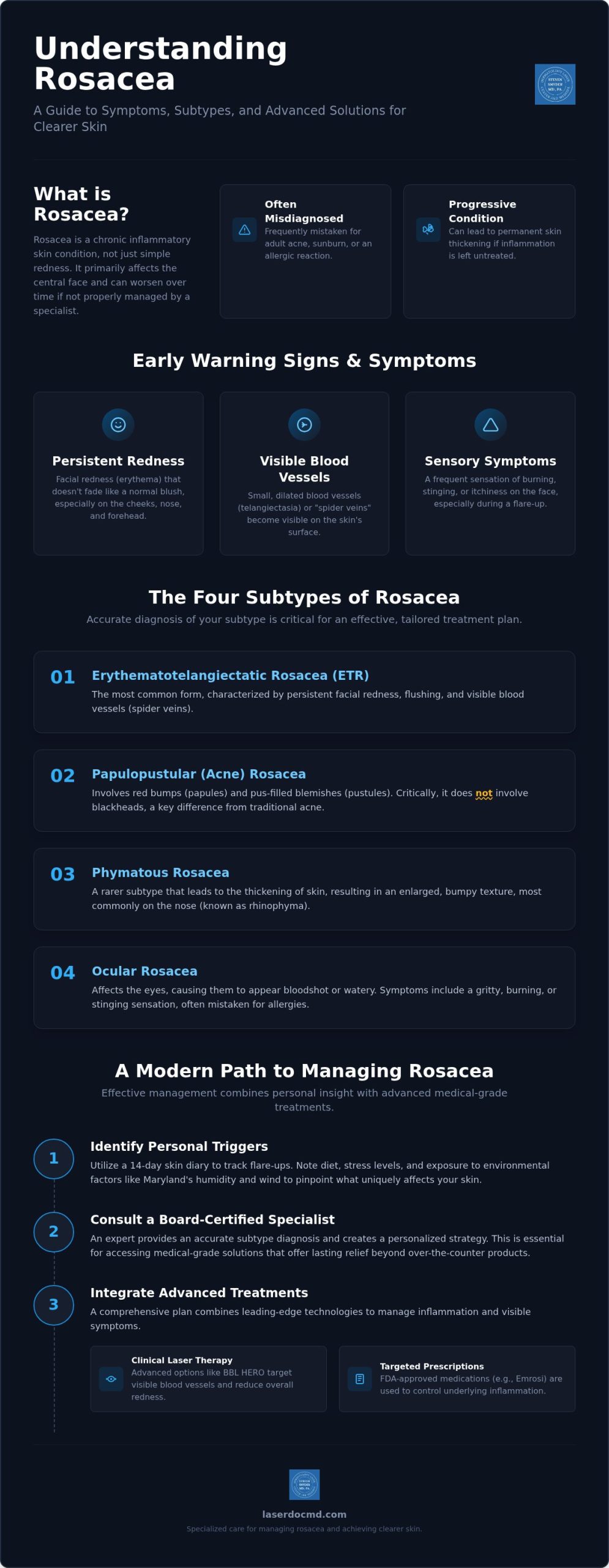
Rosacea often begins as a subtle tendency to blush or flush more easily than those around you. While it might seem like a temporary reaction to stress, spicy food, or heat, it’s actually a chronic inflammatory skin condition that primarily affects the central face. Many patients initially dismiss the persistent pinkness on their cheeks as a lingering sunburn or mistake the small, red bumps for a late onset of adult acne. However, rosacea is a vascular and inflammatory disorder requiring medical oversight to manage effectively. Without the guidance of a rosacea specialist Owings Mills, the condition can be progressive. Over years, untreated inflammation can lead to permanent skin thickening or visible disfigurement, making early clinical intervention essential for long-term health.
Common Symptoms and Early Warning Signs
Identifying the early warning signs is the first step toward reclaiming your skin’s health. You may notice persistent erythema, which is a medical term for redness that doesn’t fade after a few hours like a typical blush. Over time, you might see telangiectasia, often described as small spider veins, appearing across the nose and cheeks. These are actually dilated blood vessels that have lost their ability to constrict properly. Beyond what is visible in the mirror, many people experience sensory symptoms such as burning, stinging, or an itchy sensation during a flare. For those seeking a comprehensive overview of rosacea, it becomes clear that these sensations are part of a complex biological response rather than a simple surface irritation.
Who is Most at Risk for Developing Rosacea?
While anyone can develop this condition, certain demographics show a higher prevalence in clinical settings. It most frequently affects fair-skinned individuals between the ages of 30 and 50, particularly those of Celtic or Northern European descent. Genetics play a significant role; a family history of vascular reactivity or “easy flushing” often predisposes an individual to the condition. In our local area, environmental factors in Maryland can exacerbate these early symptoms. The extreme humidity of our summers and the biting, dry winds of winter act as significant stressors on sensitive facial skin. Consulting a rosacea specialist Owings Mills allows for a deeper look into these personal risk factors, helping you understand why your skin reacts the way it does and how to protect it from local environmental triggers.
The Four Subtypes of Rosacea and Their Unique Challenges
Rosacea isn’t a singular diagnosis; it’s a spectrum of symptoms that dermatologists categorize into four distinct subtypes. Understanding which variety you’re experiencing is vital for developing an effective treatment plan. Many of our patients in the Owings Mills community first visit a rosacea specialist Owings Mills because they’re tired of the persistent flushing associated with Erythematotelangiectatic Rosacea. This subtype focuses on visible blood vessels and a permanent “blush” that doesn’t fade with rest. Others struggle with Ocular Rosacea, where the inflammation affects the eyes, causing a gritty, dry sensation that people often mistake for seasonal allergies or chronic eye strain. To effectively Manage Your Personal Rosacea Triggers, you must first identify which of these clinical categories your symptoms fall into.
Acne Rosacea: Distinguishing Between Bumps and Breakouts
Papulopustular rosacea is frequently called “acne rosacea” because it involves red bumps and pus-filled pimples. It’s the subtype most often confused with traditional acne vulgaris. However, the distinction is critical. Unlike standard acne, rosacea bumps don’t typically include blackheads, and the surrounding skin is usually much more sensitive. If you use harsh over-the-counter benzoyl peroxide or salicylic acid on these flares, you’ll likely see increased redness and painful irritation. This is why it’s so important to consult an acne treatment dermatologist Maryland who can accurately diagnose the difference. When I evaluate your skin, I look for these subtle nuances to ensure we aren’t treating an inflammatory condition with products meant for oily, teenage skin.
Understanding Rhinophyma and Skin Thickening
Phymatous rosacea is perhaps the most distressing subtype due to its visible impact on facial structure. This stage involves skin thickening and an irregular surface texture, most commonly seen on the nose, a condition known as rhinophyma. While it’s more prevalent in men, it can affect anyone with long-term, untreated inflammation. The psychological impact of these changes is significant, but there’s hope through early intervention. Dr. Snyder uses his extensive experience to identify the transition from simple redness to tissue growth. In advanced cases, we utilize specialized laser technology to gently reshape the tissue and restore a more natural appearance. If you’re noticing changes in your skin’s texture, a consultation with a rosacea specialist Owings Mills can help you understand your options for prevention and repair.
How to Identify and Manage Your Personal Rosacea Triggers
While clinical interventions are vital for managing redness, long term success often depends on what happens outside the office. Identifying the specific factors that cause your skin to react is a collaborative process between you and your rosacea specialist Owings Mills. Every patient’s skin has a unique threshold for irritation, and uncovering these patterns requires a methodical approach. By understanding your triggers, you gain the power to predict and prevent many painful flare ups before they start. I recommend following these four steps to gain control over your skin’s environment.
- Step 1: Commit to a 14-day Skin Diary. Track your daily activities, meals, and skin reactions. Correlating a sudden flush with a specific event, like a hot shower or a stressful meeting, helps us build a more accurate care plan.
- Step 2: Monitor the Maryland weather. Our local climate presents unique challenges. Extreme summer humidity and biting winter winds are major factors that can strip the skin’s natural barrier.
- Step 3: Evaluate your diet. Common vasodilators such as caffeine, alcohol, and spicy foods often cause blood vessels to dilate rapidly. Even the temperature of your food can be a factor.
- Step 4: Audit your skincare routine. Many over the counter products contain hidden astringents or harsh exfoliants. These ingredients might be too aggressive for your sensitive complexion.
The Sun and Rosacea: Protection Strategies
Sunlight is widely recognized as a leading trigger for facial redness, affecting a vast majority of those living with the condition. UV radiation causes the skin to produce inflammatory mediators that worsen flushing and visible vessels. When choosing protection for a Baltimore summer, I always suggest physical sunscreens containing zinc oxide or titanium dioxide. These mineral filters sit on top of the skin and reflect heat, whereas chemical filters can sometimes cause a warming sensation that irritates sensitive tissue. While we focus on lifestyle, you can also explore Advanced Treatment Options to see how medical care complements these daily habits.
Stress, Exercise, and the ‘Flush’ Response
Emotional stress and physical exertion both signal the nervous system to dilate facial blood vessels. If you find that a high intensity workout leads to a lingering flush, you don’t have to stop exercising. Instead, try “cool” exercise strategies like swimming in a climate controlled pool or using a damp cloth on your neck during a walk. Mindfulness and deep breathing techniques can also be incredibly effective. By calming the nervous system’s response to stress, you can reduce the frequency of neurovascular flushing. Consulting with a rosacea specialist Owings Mills allows us to refine these strategies, ensuring your lifestyle and skin health remain in balance.
Advanced Treatment Options: From Medical Prescriptions to Laser Therapy
While managing triggers is a fundamental part of your journey, clinical intervention often provides the breakthrough needed for lasting skin stability. As a rosacea specialist Owings Mills, I utilize a multi prong approach that combines the latest pharmaceutical advancements with precision light technology. We’ve seen significant progress in medical dermatology recently, including the FDA approval of Emrosi in November 2024. These 40 mg minocycline hydrochloride extended release capsules offer a new way to treat inflammatory lesions with a focus on efficacy and patient comfort. For those struggling with persistent redness or the “acne” component of the condition, these targeted medical prescriptions can calm the skin’s internal inflammatory response before we address visible damage on the surface.
How Laser Therapy Targets Facial Redness
Many patients ask how a light based treatment can “erase” redness. The answer lies in a scientific process called selective photothermolysis. During a session of laser skin rejuvenation Owings Mills, specific wavelengths of light are absorbed by the hemoglobin in your visible blood vessels. This energy converts to heat, gently collapsing the vessel wall while leaving the surrounding healthy tissue untouched. Modern lasers are far more patient friendly than older generations, often requiring minimal downtime. You might experience a sensation similar to a light snap of a rubber band, followed by a few hours of mild warmth, but most people return to their daily routines immediately with only slight pinkness.
BBL HERO and Photorejuvenation for Rosacea
For broader areas of flushing and uneven skin tone, we often recommend BroadBand Light (BBL) therapy. Our practice utilizes advanced BBL HERO technology, which stands for High Energy Rapid Output. This system allows us to treat the entire face in a fraction of the time required by traditional methods, making the process significantly more comfortable. HERO technology is particularly effective at evening out the complexion and reducing the overall “background” redness that topicals alone cannot reach. Most patients achieve significant clearance after a series of three to five sessions, though we customize every plan based on the severity of your vascular reactivity. To see how these advanced tools can be tailored to your specific needs, I invite you to schedule a consultation with our clinical team.
In addition to these medical and laser interventions, our MediSpa offers specialized facials designed specifically for reactive skin. These treatments utilize professional grade cosmeceuticals that soothe the skin barrier and provide immediate relief from stinging or burning sensations. By integrating these aesthetics with medical dermatology, we ensure your skin isn’t just “clearer,” but also more resilient against future flares. A rosacea specialist Owings Mills can help you navigate these choices, ensuring you receive the most effective combination of modern science and attentive, individualized care.
Finding Relief with a Rosacea Specialist in Owings Mills
Selecting a board-certified dermatologist means choosing a practitioner who has dedicated years to understanding the complex architecture of the skin. While general practitioners can provide basic care, a rosacea specialist Owings Mills offers the depth of knowledge required to distinguish between simple redness and the multifaceted subtypes we’ve discussed. Dr. Steven B. Snyder has provided this level of dedicated care for over 30 years in the Owings Mills community, helping patients navigate the physical and emotional challenges of chronic skin conditions. Your first consultation is designed to be a thorough, unhurried dialogue. We’ll examine your skin’s current state, review your medical history, and begin identifying the specific vascular patterns that define your flares.
The Multi-Pronged Approach at Dermatology Laser Center & Medispa
My philosophy centers on the belief that total skin restoration requires a blend of medical precision and aesthetic refinement. We don’t just hand you a prescription and send you on your way. Instead, we create a roadmap that might combine advanced prescriptions with the laser rejuvenation we explored earlier. We also provide customized cosmeceutical recommendations to support your skin barrier at home, ensuring your daily routine doesn’t undo the progress made in the clinic. Because chronic inflammation can sometimes mask other issues, having a specialist also means your skin is regularly monitored for other concerns. For instance, we offer GentleCure, a non-surgical treatment for certain skin cancers, providing peace of mind that your overall skin health is being watched with a professional eye.
Scheduling Your Consultation in Owings Mills
Taking the first step toward clearer skin shouldn’t feel overwhelming. To make the most of your time with a rosacea specialist Owings Mills, I suggest preparing a few items before your visit. Bringing the 14-day trigger diary mentioned in section three is incredibly helpful, as is a list of your current skincare products and any medications you’re taking. This data allows us to bypass the guesswork and move straight into a strategy that works for you. Our office is conveniently located to serve residents of Owings Mills, Reisterstown, and the greater Baltimore area. We’re here to help you move past the frustration of sudden flushing and into a life of skin confidence. Relief isn’t just about a single treatment; it’s about a long-term partnership built on expertise and attentive care. Many of our patients also take this opportunity to address other benign skin concerns alongside their rosacea management, such as exploring skin tag removal Owings Mills to achieve a comprehensively clearer complexion in a single, convenient visit.
Take the First Step Toward a Clearer, More Confident Complexion
Living with the unpredictability of rosacea can feel like a constant battle against your own skin. However, by identifying your personal triggers and understanding your specific subtype, you’ve already begun the process of regaining control. Combining this awareness with advanced clinical solutions, such as the precision of BBL HERO technology, allows for a transformation that topical medications alone often cannot achieve. I believe that every patient deserves a path to comfort that is as unique as their complexion.
With over 30 years of expertise, Dr. Steven B. Snyder provides the compassionate, individualized medical and cosmetic care necessary to manage even the most stubborn flares. As a dedicated rosacea specialist Owings Mills, he prioritizes a patient centered approach that values your personal experience as much as the clinical outcome. You don’t have to navigate the confusion of facial redness alone. We’re here to help you restore your skin’s health and your own peace of mind.
Schedule your rosacea consultation with Dr. Snyder in Owings Mills today.
Frequently Asked Questions
Is rosacea permanent, or can it be cured completely?
Rosacea is a chronic condition, which means there isn’t a permanent cure, but it can be managed with remarkable success. By partnering with a rosacea specialist Owings Mills, you can develop a strategy that leads to long periods of remission where symptoms are virtually invisible. Our focus is on controlling the underlying inflammation to prevent the condition from progressing and to maintain a calm, healthy complexion over the long term.
How can I tell if I have rosacea or just adult acne?
The primary distinction lies in the presence of blackheads and the nature of the background redness. Traditional acne typically involves clogged pores and blackheads, whereas rosacea presents as a steady “blush” with red bumps that lack a central plug. If your skin feels unusually sensitive, stings when you apply standard products, or flushes easily in response to heat, it’s more likely that you’re dealing with rosacea.
Does insurance cover rosacea treatment in Maryland?
Medical consultations and prescription medications for rosacea are often covered by insurance plans, though cosmetic procedures like laser therapy usually are not. Since rosacea is a medical inflammatory condition, many insurers recognize the necessity of a professional diagnosis and the use of topical or oral prescriptions. It’s always wise to verify your specific benefits with your provider, but our clinical team can help document the medical necessity of your care.
What is the best sunscreen for someone with rosacea redness?
Physical sunscreens containing zinc oxide or titanium dioxide are generally the most effective choice for reactive skin. These mineral filters sit on the surface and reflect UV rays without generating the internal heat that chemical sunscreens often produce. I recommend looking for fragrance free, non comedogenic formulas that provide broad spectrum protection to prevent the UV induced flares that frequently affect our local Maryland community.
Can laser treatment for rosacea cause more redness initially?
Yes, it’s normal to experience a temporary increase in redness or mild swelling immediately following a laser session. This is a natural part of the biological response as the targeted blood vessels react to the light energy. Most patients find that this initial pinkness lasts only a few hours to a couple of days, after which the skin begins to appear clearer and more even than it did before the treatment.
Are there specific foods I should avoid to prevent rosacea flares?
Spicy foods, hot beverages, and alcohol are the most common dietary triggers that cause facial blood vessels to dilate rapidly. Some patients also find that chocolate or certain aged cheeses can prompt an uncomfortable flush. By working with a rosacea specialist Owings Mills, you can use a skin diary to identify which specific items act as your personal vasodilators, allowing you to make informed lifestyle adjustments without unnecessary restriction.
What happens if rosacea is left untreated over several years?
Untreated rosacea is often progressive, meaning the temporary redness can eventually become permanent and the skin texture may coarsen. Over time, chronic inflammation can lead to phymatous changes, such as skin thickening on the nose, and visible spider veins may become much more prominent. Early intervention is the most effective way to protect your skin’s structural integrity and prevent these more complex, long term complications from developing.
How long does it take to see results from clinical rosacea treatments?
Most patients begin to see a visible reduction in inflammation within four to six weeks of starting a new medical prescription. However, achieving significant clearance of visible blood vessels through advanced laser therapy usually requires a series of sessions spaced several weeks apart. Patience is essential in this process, as we’re working to gently retrain your skin’s vascular response and build a more resilient barrier for the future.